La falacia de que «la RAM está para ser usada»

Parece que se ha vuelto popularizado un error de concepto en algunos foros de usuarios. Tal vez recuerdes esta frase: La RAM está para ser usada. Esta frase es cierta dentro de un contexto en particular. Se usa para permitir que el sistema operativo acelere disco a RAM tanto como sea posible, pues la RAM … Leer más

The «RAM is there to be used» fallacy

There seems to be a common misconception around some user forums. Maybe you recall this phrase:

RAM is there to be used.

This phrase is true within a particular context. It is used to let the operating system cache as much disk as possible into RAM, as RAM is significantly faster than hard disks.

However, within the context of a user-space application it is actually a fallacy. Some users (and even some developers) don’t know much about the inner workings of their computers, and use this phrase outside of its proper context. What is worse, sometimes they don’t even care much about RAM consumption. They don’t care about memory leaks, or think that if memory leaking occurs only once, it’s fine. Or they think garbage-collected frameworks or languages will take care of everything by magic. Without knowing, they end up using the aforementioned phrase as the equivalent of:

RAM is there to be wasted.
Leer más

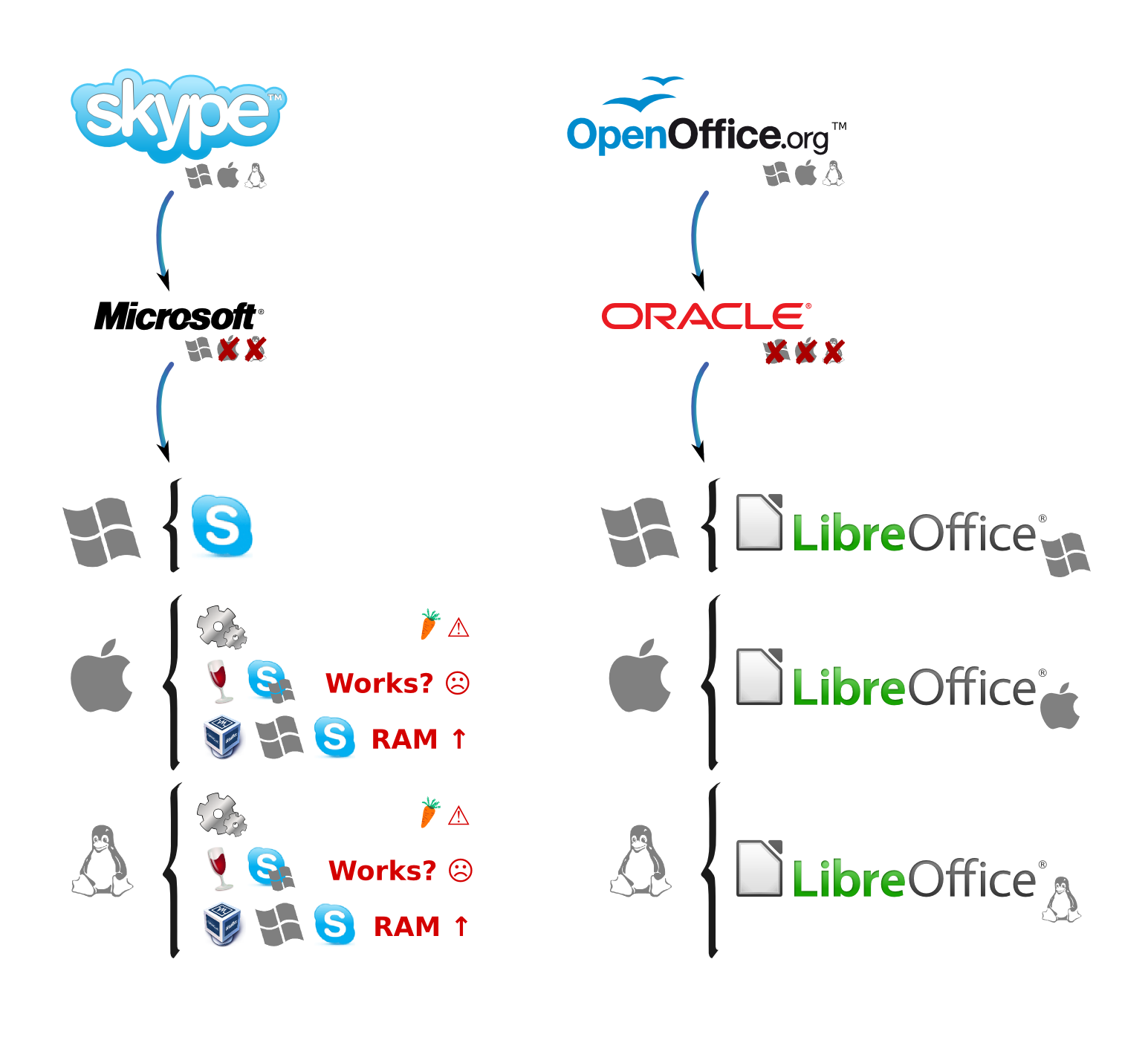
Gratis vs. libre: La compra de Skype por Microsoft

Gratis vs. Libre
Gratis vs. Libre

Cuando no se requiere de pago alguno para usar plenamente un programa se dice que es «gratuito». Dos ejemplos son Skype y OpenOffice.org. Sin embargo, existe una diferencia radical entre ambos: las libertades legales que la licencia de OpenOffice.org garantiza. Por eso se le llama software «libre».

OpenOffice.org es más que simplemente gratuito y más —incluso— que simplemente «de código abierto». Disponer del código fuente de un programa no implica la libertad legal de hacer públicas las mejoras.

Leer más